We install three kinds of egress window wells on Long Island: block-built masonry from around $5,500, Boman Kemp from around $6,000, and Cambridge ArmorTec from around $8,500. All three get the same European tilt-and-turn window, the same drainage and waterproofing, and the same 5-year workmanship warranty. What changes is the look, what’s included on top, and the price.
Below is how the three compare, how depth and drainage affect the choice, and how to pick the right one for your house. If you want the full price picture first, start with what an egress window costs on Long Island.
Egress window well options at a glance
| Well | Starts at | Look | Ladder or steps | Cover |
|---|---|---|---|---|
| Masonry | Around $5,500 | Block-built with a scratch coat finish and paver caps | Ladder and steps included | Included: metal frame with strong polycarbonate |
| Boman Kemp | Around $6,000 | Manufactured well in white or stacked stone | Boman Kemp ladder included | Included: steel cover with a polycarbonate top |
| Cambridge ArmorTec | Around $8,500 (to 40 in. deep) | Cambridge block with cap units | Built-in Cambridge steps, built to code | Not included, priced on request |
Starting prices are for a complete egress install, not just the well. Interior finish around the new opening is extra, and deeper wells cost more (more on that below).
Masonry wells: our starting point
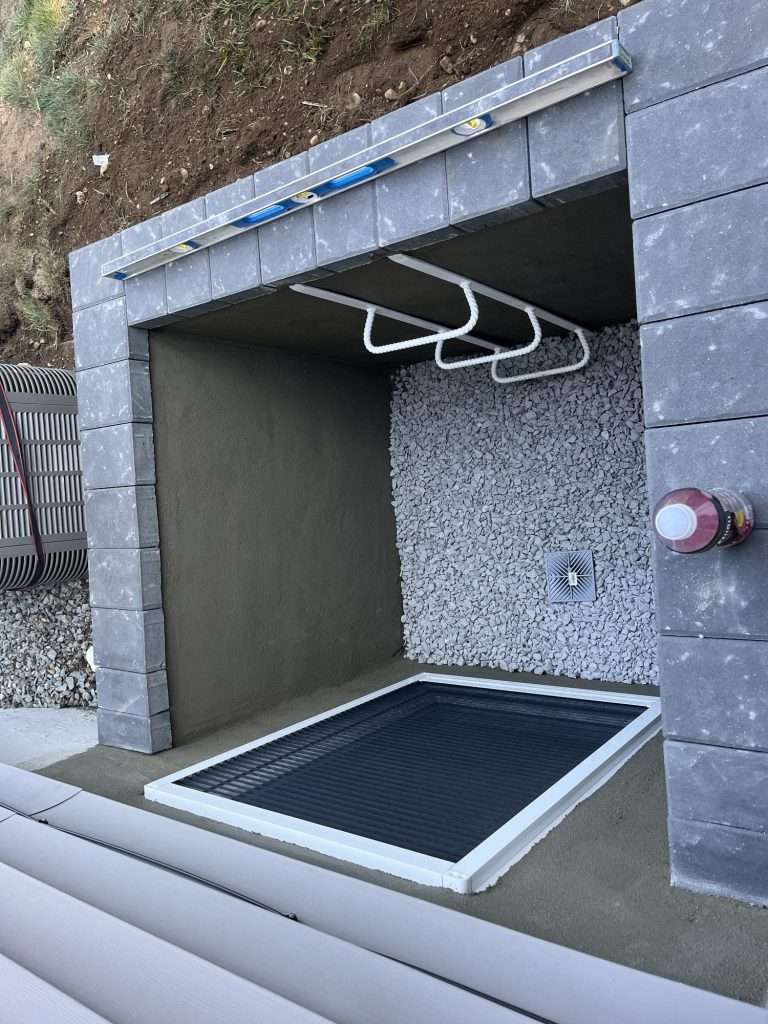
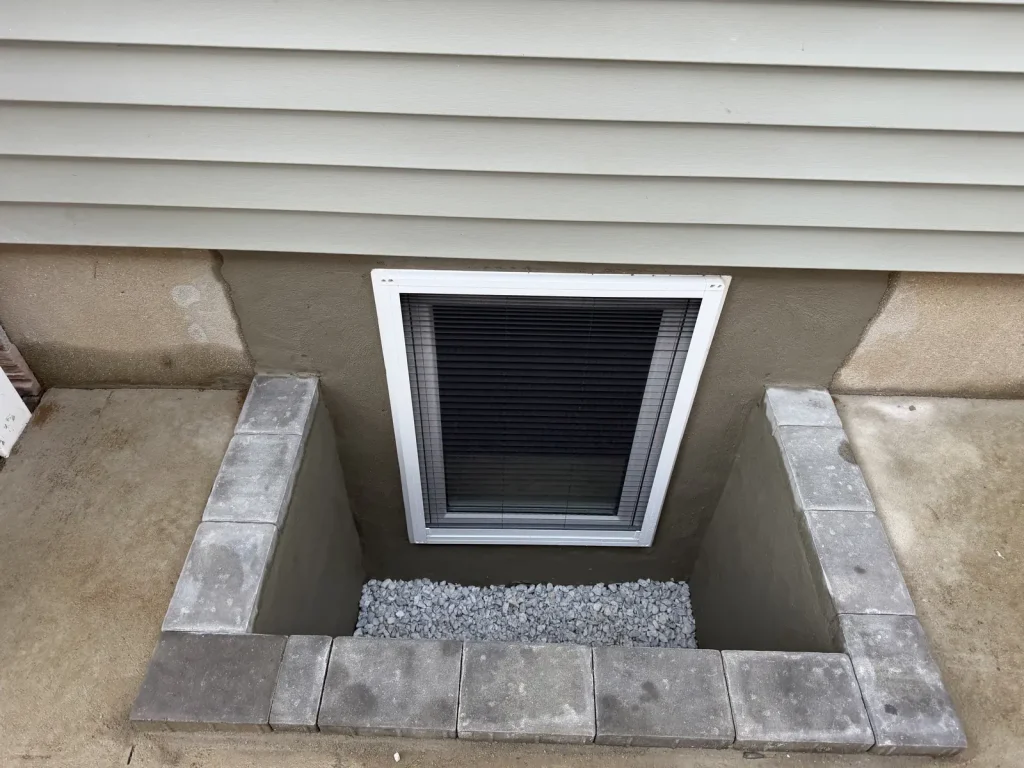
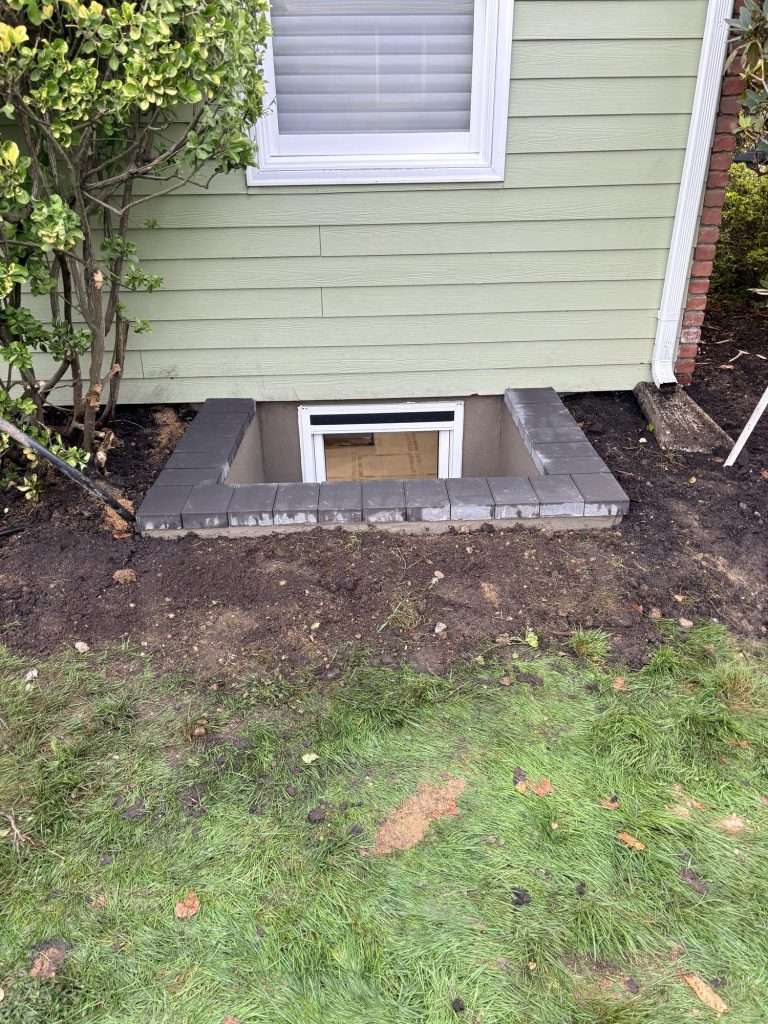
Our masonry well is built in place from standard block and finished with a scratch coat. It does not use Cambridge block, which is why it costs less than Cambridge. It starts at around $5,500 and includes the ladder, steps, paver caps and a cover made of a metal frame with strong polycarbonate. A good share of our jobs land right at that base price.
A masonry well is built in place, so it blends in beside a patio, along a walkway or in a front yard. Deeper masonry wells cost more, and we quote the exact number at your free consultation.
Boman Kemp wells: a manufactured system
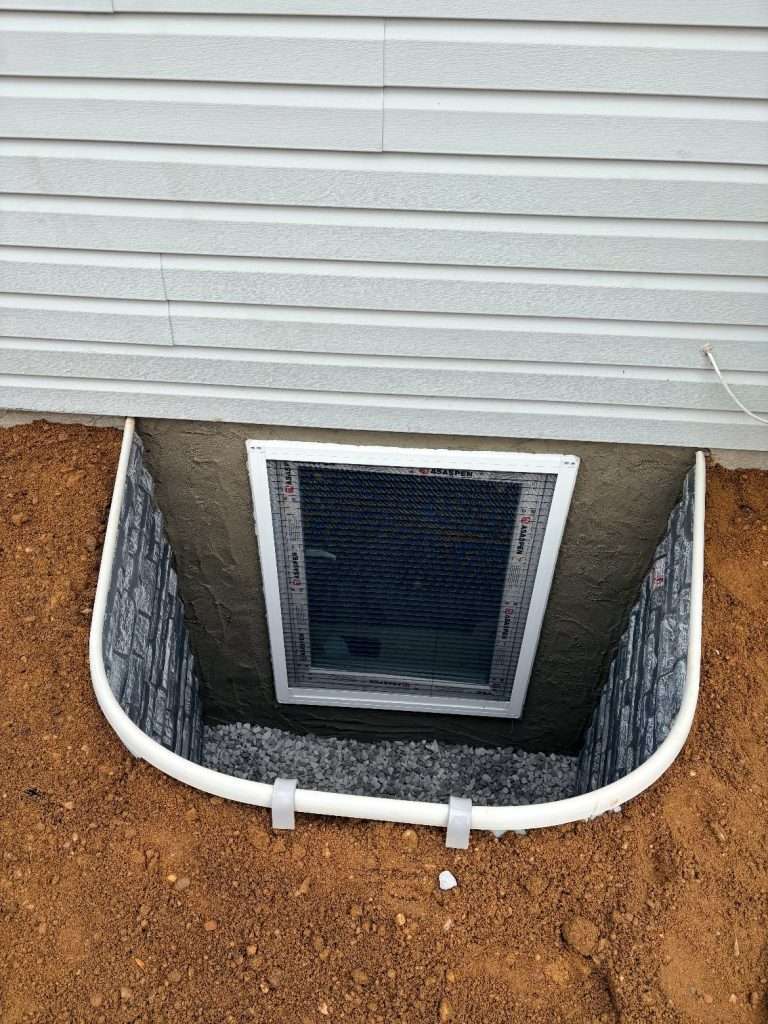
Boman Kemp wells come in white or stacked stone, and the well, ladder and cover are made to fit each other. A Boman Kemp install runs around $6,000 and includes the Boman Kemp ladder and a steel cover with a polycarbonate top. Boman Kemp rates the steel safety grate and polycarbonate cover to hold up to 600 pounds of snow load. The well also carries a manufacturer warranty on top of our 5-year workmanship warranty.
Deeper Boman Kemp wells cost more too, and we quote that at your consultation.
Cambridge ArmorTec wells: the premium block
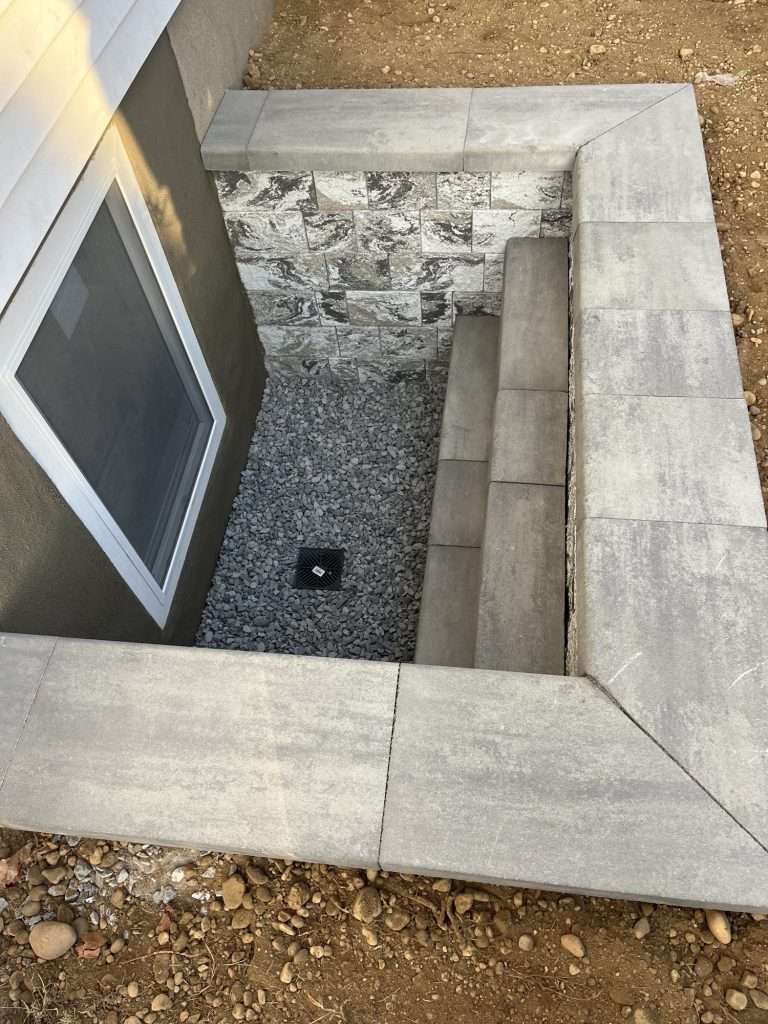
Cambridge ArmorTec is a segmental retaining wall system: interlocking concrete units stacked in courses and finished with Cambridge cap units. It costs more because of the Cambridge block. Pricing starts at around $8,500 for wells up to 40 inches deep, plus $1,000 for every extra 12 inches past that. It comes with built-in Cambridge steps built to code, and drainage and cleanup are included.
It is the only one of the three that does not include a cover. We recommend one and price it on request. Our masonry and Cambridge wells are both block, but they are different systems: standard block with a scratch coat versus Cambridge block. That difference is what drives the price gap.
What every well includes
No matter which well you pick, the install covers the same core work:
- A European tilt-and-turn egress window, standard size 32×42 (other sizes can be ordered)
- Machine excavation, a saw-cut and reinforced foundation opening, and below-grade waterproofing
- A drainage stone base and a 50-gallon NDS Flo-Well
- Backfill and broom-finished cleanup of the work area
- Our 5-year workmanship warranty
Most installs are done in 1 day, and we install year-round, weather permitting. Permits and any engineered drawings are the homeowner’s responsibility, and we’ll explain what your town requires. See the full egress window installation details or browse our project gallery.
What a window well has to do
When a basement window sits below grade, the soil outside has to be held back so the window can open and a person can climb out. The well is that retaining wall. It has to keep its shape against the soil year after year and leave enough room to escape.
How big it has to be is set by code, not by material. Under Section R319 of the 2025 Residential Code of New York State, which is based on the 2024 International Residential Code, a window well needs at least 9 square feet of floor area, and it has to extend at least 36 inches out from the foundation and be at least 36 inches wide. The adopted codes are published by the New York Department of State. Masonry, Boman Kemp and Cambridge wells can all meet those numbers when built to the right size.
Depth is set by the window, not the yard
You don’t pick how deep a window well goes. The sill of an egress window can be no more than 44 inches above the basement floor, and the well has to reach below the window so it can open fully. So where the sill lands inside decides how far below grade the window sits outside, and that sets the depth of the well.
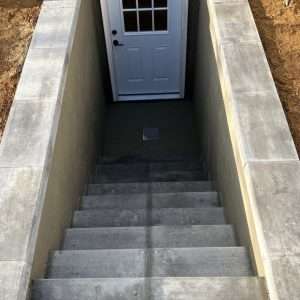
Depth changes two things. Any well deeper than 44 inches needs a permanently attached ladder or steps: masonry wells come with a ladder and steps, Boman Kemp wells with a Boman Kemp ladder, and Cambridge wells with built-in Cambridge steps. Depth also moves the price. Deeper masonry and Boman Kemp wells cost more and are quoted at your free consultation. Cambridge wells include up to 40 inches, then add $1,000 for each extra 12 inches.
The window has its own minimums: a net clear opening of 5.7 square feet, at least 24 inches high and at least 20 inches wide. New York’s code allows 5 square feet for openings at grade floor or below grade. Our post on the smallest egress window for a basement walks through those numbers, and what makes a window an egress window explains the rest.
Drainage matters as much as the wall
Every window well catches water. Rain and snowmelt fall straight in, and it doesn’t matter whether the walls are block or steel. That water needs a way out.
On all three of our wells, the bottom of the well is drainage stone over a 50-gallon NDS Flo-Well storm water leaching system, which holds the water and lets it soak into the surrounding ground. It is not tied into footing drains, a sump or existing piping.
No drainage setup guarantees you’ll never see water. Leaves packed into the stone, a downspout emptying into the well, or ground that’s already saturated can all overwhelm it. A cover helps with the leaves. Pointing downspouts away helps with the rest. If water is already getting inside, read our post on whether egress windows leak.
Which well should you pick?
- Budget leads the list: go with masonry. It has the lowest starting price, and the ladder, steps, paver caps and cover are all included.
- You want a manufactured system: pick Boman Kemp. The well, ladder and cover are made to fit each other, in white or stacked stone, with a manufacturer warranty.
- You want the Cambridge block look: pick Cambridge ArmorTec, with built-in steps and cap units. Plan for the cover as a separate line item.
The starting prices above are just that. For everything that goes into the final number, see what an egress window costs on Long Island. See our window well covers page for covers. Replacement and custom covers are coming soon.
Frequently asked questions
Which egress window well is best?
There isn’t one best well. Masonry has the lowest starting price. Boman Kemp suits homeowners who want a manufactured well with a manufacturer warranty. Cambridge ArmorTec is the premium block option. All three meet code when built to size.
How much does an egress window well cost on Long Island?
A complete egress install starts around $5,500 with a masonry well, around $6,000 with a Boman Kemp well, and from around $8,500 with a Cambridge ArmorTec well. Deeper wells cost more.
Are metal or plastic window wells better?
We install masonry, Boman Kemp galvanized steel and Cambridge block wells. We don’t install molded plastic or composite wells. InterNACHI, the home inspector association, lists cracking and bowing as common problems in plastic wells, and rust, bowing or rupture in metal ones. No material is immune, so how rigid the well is, how it’s drained and how the backfill is compacted matter as much as what it’s made of. If you’re quoted a plastic well, ask for the manufacturer’s specs on wall thickness and cover load. If your well is already cracked or bowing, read why wells fail and what to replace them with.
Can a window well be made of concrete block?
Yes. Our masonry well is built from standard block with a scratch coat finish, and our Cambridge ArmorTec well is built from Cambridge’s segmental concrete block with cap units.
Does a window well need a cover?
A cover keeps leaves, debris and snow out and still lets a person climb out. Our masonry and Boman Kemp installs include one. Cambridge wells are priced without a cover, and we quote one on request.
How long does an egress window install take?
Most installs are done in 1 day. We install year-round, weather permitting.
Get a quote on the right well for your house
Our installers have 20 years of experience, and we’re rated 5.0 on Google from 59+ reviews. Book a free consultation and we’ll check your depth, your town’s requirements and your yard, then quote the well that fits. You’ll get $500 off when you book the free consultation. Start on our egress window installation page.