
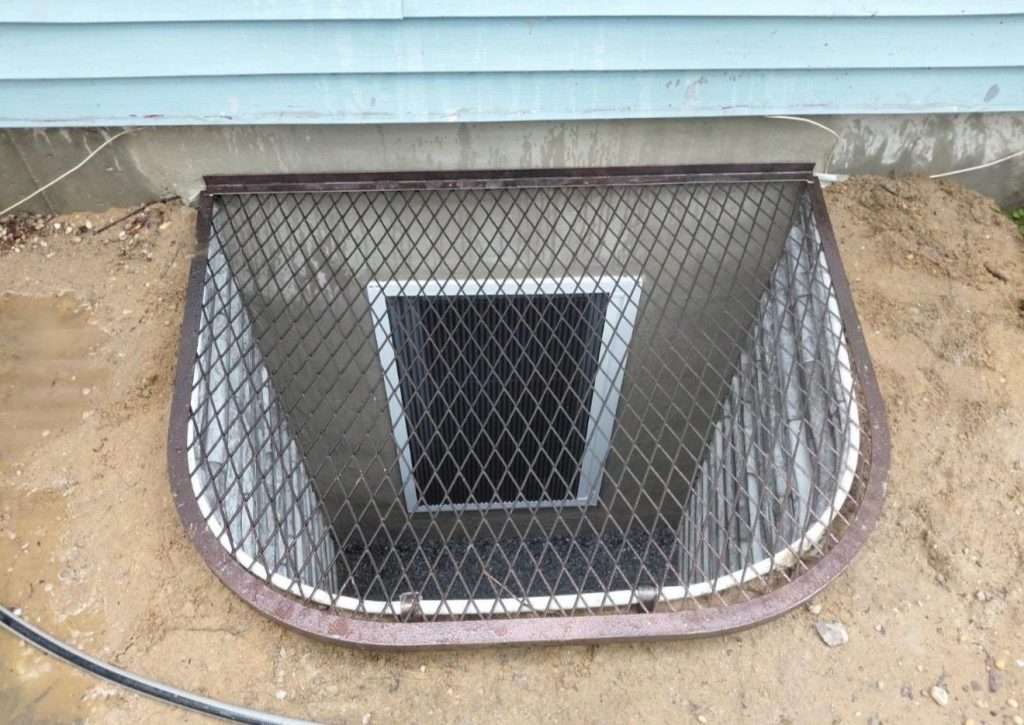
Here’s how to winterize a window well: clear the debris out of it, check that water still drains through the bottom, confirm the cover opens from inside without tools, and keep snow and ice off that cover through the winter. Do it in the fall, while the ground is still soft and you can actually see what’s down there.
One thing this post won’t tell you is that a clean well keeps a basement dry. Water finds its way into basements for reasons that have nothing to do with leaves in a window well, and our post on why egress windows leak covers those. What these steps do is keep the well working the way it was built to work, and keep an egress window usable as an escape route on the night somebody needs it.
Table of Contents
ToggleHow to winterize a window well: the fall checklist
Do these four things, in this order.
Step 1: Empty the well
Gloves on, everything out. Leaves, acorns, mulch that washed in over the summer, the ball nobody went looking for.
Leaves are the part that matters. They pack into a mat over the bottom of the well, and once that mat freezes it acts like a lid. A well full of frozen leaf pack can’t take meltwater anywhere.
With the well empty, look at the bottom. You should see drainage stone. If what you see instead is a crust of silt and rotted leaf matter with stone buried somewhere underneath, that’s the thing to deal with before the cold, not the cover.
Step 2: Check that it still drains
Run a garden hose into the well for a minute and watch where the water goes. It should soak down through the stone. If it pools and sits against the foundation or the window frame, the well isn’t draining.
Resist the urge to fix that by dumping more stone on top. Stone piled up near the window puts standing water right at the frame, which is the opposite of what you want. Keep the top of the stone well below the bottom of the window.
A well that holds water is worth having a contractor look at in the fall rather than in a January thaw. What’s causing it is usually below the surface, and two houses on the same street can behave differently. If the well itself is failing, we replace it, and the new well gets the same stone base and Flo-Well as a new install. See our guide to window well replacement.
For reference, the wells we install sit on a drainage stone base over a 50-gallon NDS Flo-Well. Our guide to egress window well drainage explains how it works.
Step 3: Open the window
While you’re down there, go inside and open the basement window all the way.
A window that’s painted, swollen, rusted, or blocked by storage isn’t an emergency escape and rescue opening anymore, whatever it was on the day it passed inspection. It should open fully, from inside, without unusual force and without a tool or a key. Once a year is enough to check, and fall is a sensible time to make it a habit.
While the sash is open, look at the weatherstripping and the sealant around the frame. Basement windows sit in the coldest, dampest part of the house, and that’s where sealant often gives up first. If you’re not sure what your window is supposed to do in the first place, what makes a window an egress window covers it.
Step 4: Confirm the cover opens from below
Don’t skip this step.
Under New York’s residential code rule on bars, grilles, covers, and screens, anything placed over an emergency escape and rescue opening or the well serving it has to be releasable or removable from the inside without a key, a tool, special knowledge, or more force than opening the window itself takes. That rule doesn’t pause for winter.
So test it the way you’d need it. From inside the basement, open the window, then push the cover open from underneath. If it sticks, if it’s been screwed down, if there’s a padlock on it, or if there’s a stack of patio furniture and firewood sitting on top, that well has an escape problem right now.
A tarp weighted with bricks and a sheet of plywood are not covers on an egress well. A proper cover keeps snow out of the well, keeps leaves from undoing step 1 every year, and still lets a person out.
Masonry and Boman Kemp installs include a cover: a metal frame with strong polycarbonate on masonry wells, and a steel cover with a polycarbonate top on Boman Kemp wells. Cambridge ArmorTec wells are priced without a cover. Both of the covers we include open from the inside without a tool or a key. If you have an existing well with a cracked, cloudy, or missing cover, replacement covers for existing wells are coming soon. You can see how we approach covers on our window well covers page.
Through the winter: snow and ice
A few habits get a well through a Long Island winter.
- Clear snow off the cover after storms. A broom or a plastic shovel is enough, and it avoids scratching a polycarbonate top the way a metal blade would.
- Don’t pile shoveled snow from the driveway, walk, or steps against the well. That’s how a well ends up holding a snowbank long after the yard is clear.
- Check the cover after freezing rain. If it has frozen to the well, free it gently rather than prying with a metal bar.
- Before using ice melt or any chemical near the cover, check the manufacturer’s care instructions for the cover material.
- Keep the path to the well clear enough that a firefighter could get to it.
An egress window buried under a foot of snow with a frozen cover on top is not an exit, and that’s why this is worth doing before February.
What to skip
A few winter ideas that come up and shouldn’t be done on an egress well.
Skip insulating the well itself; the FAQ below explains why.
Don’t seal the cover down with tape, screws, or shrink wrap. Same reason as step 4.
Don’t backfill the well with soil or mulch instead of stone. Both hold water against the foundation, and mulch breaks down into exactly the sludge that seals up a drain.
Frequently asked questions
Should you cover window wells in winter?
Yes. A cover keeps snow, ice, and leaves out of the well, which means less water sitting against the window frame and less debris to clear in the spring. On an egress window well, the cover has to be removable or releasable from inside without a tool or a key, so a screwed-down panel or a weighted tarp isn’t an option.
Should window wells be filled with gravel or dirt?
Drainage stone, never soil or mulch. Stone lets water move down through the well. Soil and mulch hold water against the foundation and break down into silt that packs into the bottom of the well. Keep the top of the stone below the bottom of the window frame so standing water never sits against the frame.
Can you shovel snow off a window well cover?
Yes, and it’s worth doing after each storm. Use a broom or a plastic shovel rather than a metal blade, which can scratch a polycarbonate top. Clear the snow away from the well rather than pushing it in, and don’t pile driveway snow against the well, since that load takes far longer to melt.
What if the window well cover is frozen shut?
Treat it as an escape problem and deal with it that day. Free the cover gently rather than prying at it with a metal bar, and check the manufacturer’s care instructions before putting any ice melt or chemical on the cover material. A cover that freezes shut every winter is often sitting in a well that holds water.
Do I need to insulate a window well?
No. Filling the well with foam board, insulation, or bagged leaves blocks a well the code requires to stay clear for escape, and it holds moisture against the foundation and the frame. If the basement feels cold, start with the window seal and the rim joist instead.
Planning an egress window?
We install year-round, weather permitting, and most installs are done in 1 day. Planning ahead? See the best time of year to install an egress window on Long Island.
Egress window installs start around $5,500 with a masonry well, around $6,000 with a Boman Kemp well, and from around $8,500 with a Cambridge ArmorTec well. Every install includes the European tilt-and-turn window, machine excavation, waterproofing, a drainage stone base, the Flo-Well, compacted backfill, restoration of the disturbed area around the well, and broom-finished cleanup. Interior finish is extra. Details are on the egress window installation page.
Our installers have 20 years of experience. We’re licensed, and every install carries our 5-year workmanship warranty. Permits and engineered drawings are arranged by the homeowner, and we’ll tell you what your town requires.
Book a free consultation and get $500 off. Start on our egress window installation page. Replacement covers for existing wells are coming soon, so ask us about them at your consultation.


